Hermeticism
Overview
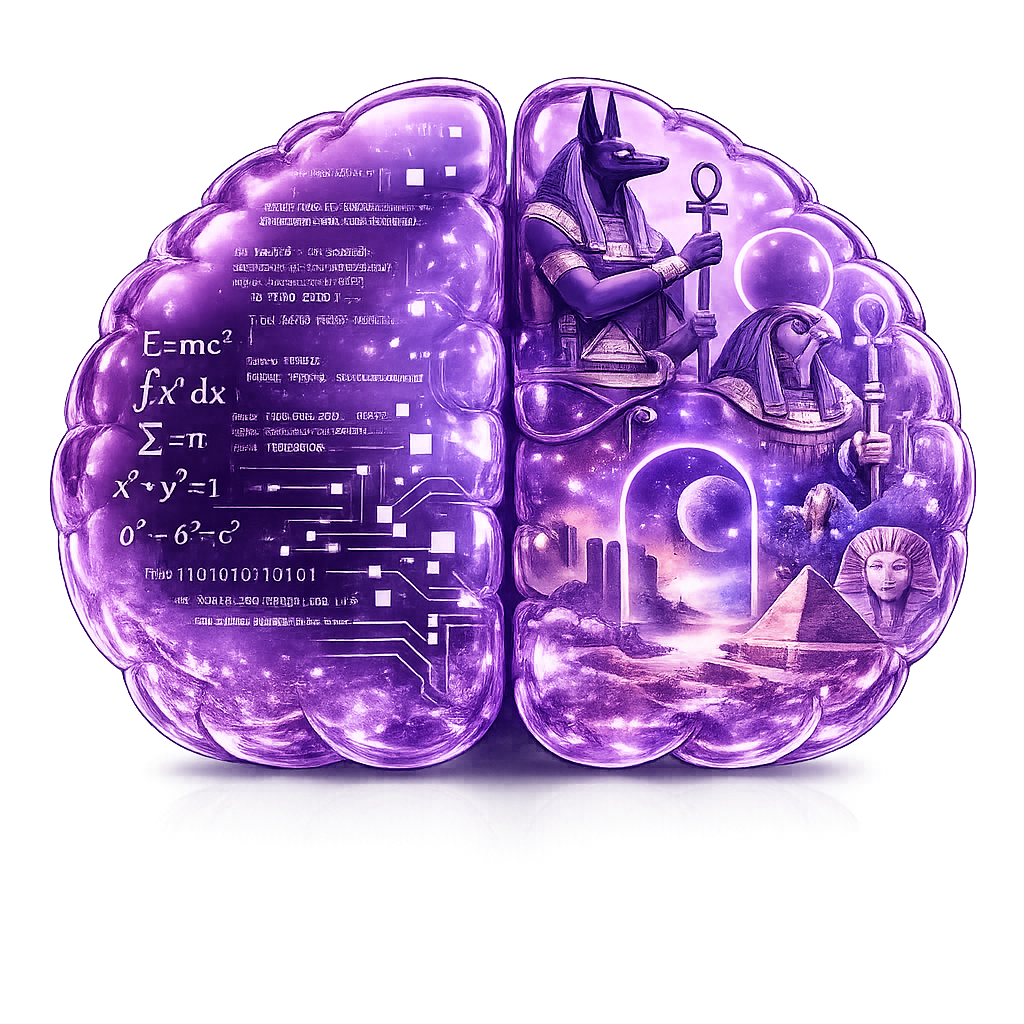
The philosophical and theological tradition attributed to Hermes Trismegistus (“Thrice-Greatest Hermes”), identified with the Egyptian god Thoth. The core texts — the Corpus Hermeticum — were written roughly 1st-3rd centuries CE in Greco-Egyptian Alexandria. Structured as dialogues between Hermes and his disciples (Tat, Asclepius) and between Hermes and a cosmic Intelligence called Poemandres.
Core Teachings
- Reality is a downward cascade of consciousness: God → Mind (Nous) → Word (Logos) → World
- Man voluntarily descended into matter out of love and curiosity
- The world is beautiful — a “second God,” not a prison
- ignorance-as-root-evil — ignorance of divine nature is the root problem
- self-knowledge-as-god-knowledge — “the man of mind, let him recognise himself”
- god-as-pure-awareness — God is Mind, the substance of all things (Ch. XI)
- regeneration — interior rebirth through expelling vices and receiving divine powers (Ch. XIII)
- The soul ascends through seven planetary spheres, shedding vices, to the Ogdoad
- God is “invoked by silence” — contemplative inwardness is the primary method
- Nothing truly perishes — only transforms
Key Distinction from Gnosticism
The creator God in Hermeticism is the supreme God (or His direct expression). Creation is an act of love, not a catastrophe. The world is worthy, not a prison. The fall is an adventure, not a tragedy. See: hermeticism-vs-gnosticism
Source Text Read
The Theological and Philosophical Works of Hermes Trismegistus, trans. John David Chambers (Edinburgh: T&T Clark, 1882). Full text via Internet Archive.
Connections
- the-divine-self — the tradition this personal revelation aligns with most
- gnosticism — the sibling tradition; compare via hermeticism-vs-gnosticism
- gospel-of-thomas — occupies a middle ground between Hermetic and Gnostic
- advaita-vedanta — independent convergence on similar conclusions
- neoplatonism — the philosophical framework Hermeticism draws from
- alchemy — the tradition Hermeticism fed into