Carl Jung
The Figure
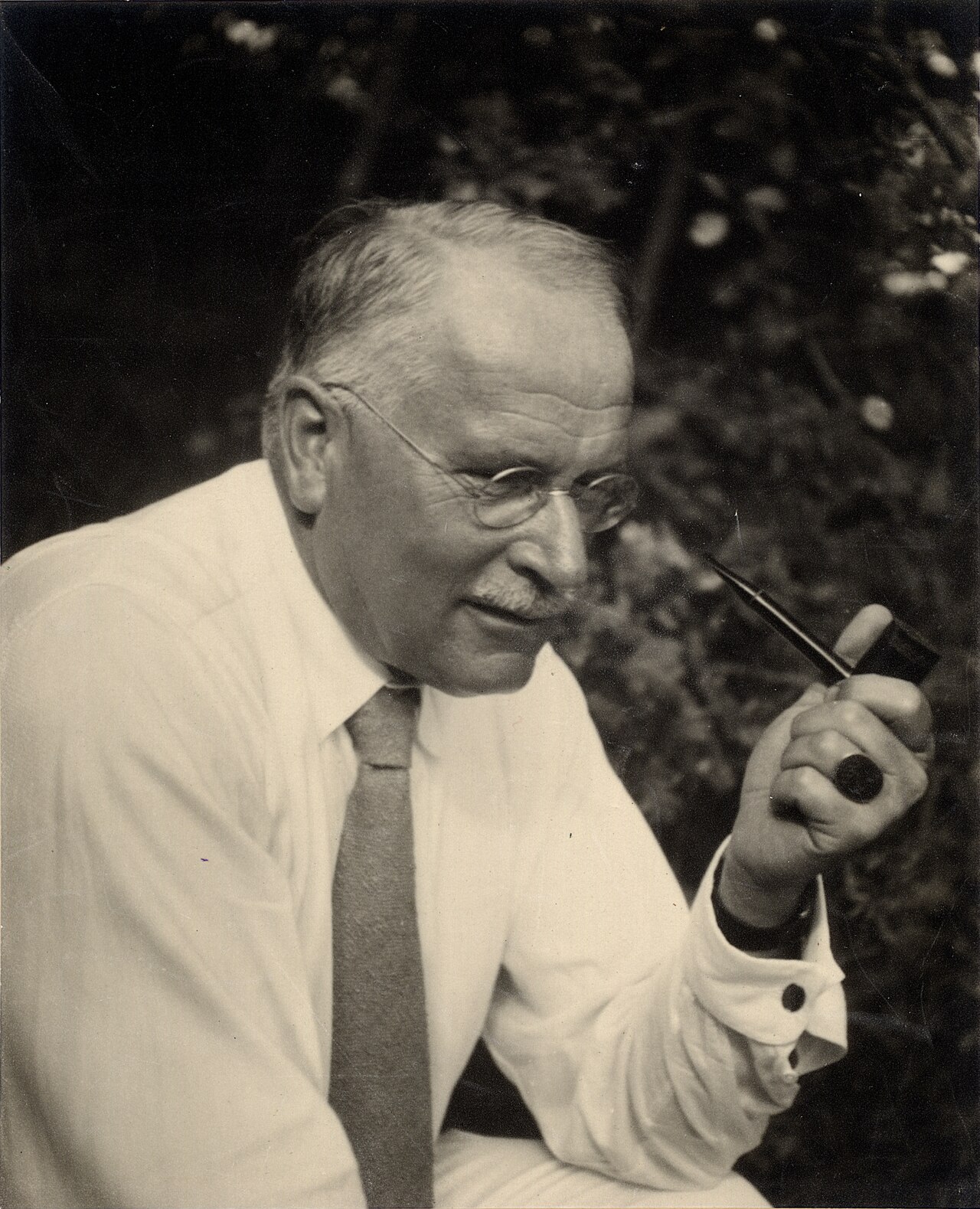
Carl Gustav Jung — Swiss psychiatrist, psychoanalyst, and the founder of analytical psychology. Initially a close collaborator of Sigmund Freud, he broke with Freud in 1912 over fundamental disagreements about the nature of the unconscious. Where Freud saw the unconscious as primarily a repository of repressed sexual and aggressive impulses, Jung saw it as a vast, creative, meaning-generating matrix containing the accumulated wisdom of the entire human species.
Jung’s personal confrontation with the unconscious — documented in The Red Book (written 1914-1930, published posthumously in 2009) — reads like a modern Gnostic revelation. He encountered autonomous inner figures, traversed visionary landscapes, and received teachings that he spent the rest of his career integrating into a psychological framework.
Core Concepts
The Shadow
The jung-and-the-shadow is the repressed, denied, or unlived aspects of the personality — everything the conscious ego refuses to acknowledge. Not inherently evil: the shadow contains not only what we fear but also unlived creative potential, instinctual vitality, and emotional depth. Integration of the shadow is the first and most essential step of individuation.
Jung insisted: “One does not become enlightened by imagining figures of light, but by making the darkness conscious.” See: shadow-integration.
The Collective Unconscious
Beneath the personal unconscious lies a layer shared by all humanity — the collective unconscious, populated by archetypes: primordial patterns (the Mother, the Hero, the Wise Old Man, the Anima/Animus, the Self) that structure human experience across cultures. These are not inherited ideas but inherited structures of perceiving — the forms into which experience pours.
Individuation
The central process of Jung’s psychology — the progressive integration of unconscious contents into conscious awareness, leading toward wholeness (the Self). Not perfection but completeness — including the shadow, the rejected, the ugly. The goal is not to become only light but to become whole.
Projection
What cannot be acknowledged in the self gets displaced outward and perceived as existing in the world or in other people. The outer world becomes a screen for inner unfinished business. See: outer-world-as-mirror.
Jung and the Ancient Traditions
Jung was deeply immersed in the traditions explored throughout this knowledge base:
Jung and Gnosticism
Jung saw gnosticism as an ancient form of depth psychology — the Gnostic myths as projections of the individuation process onto a cosmic screen. The demiurge as the ego that doesn’t know it isn’t the ultimate authority. The divine-spark as the Self buried beneath layers of unconscious identification. The pleroma as the state of psychic wholeness. His Seven Sermons to the Dead (1916) is written as a Gnostic text attributed to Basilides of Alexandria.
Jung and Alchemy
Jung spent decades studying alchemy, which he understood not as failed chemistry but as a symbolic language for the transformation of the psyche. The Magnum Opus (Great Work) = individuation. Nigredo (blackening) = confronting the shadow. Albedo (whitening) = purification. Rubedo (reddening) = integration and wholeness. Solve et coagula = dissolving old structures and reforming them consciously.
Jung and Hermeticism
The Hermetic dictum “as above, so below” is essentially Jung’s principle of synchronicity and the mirror relationship between inner and outer worlds. The Hermetic regeneration maps onto Jung’s individuation. See: hermeticism.
Key Quotes
“Who looks outside, dreams; who looks inside, awakes.”
“One does not become enlightened by imagining figures of light, but by making the darkness conscious.”
“Until you make the unconscious conscious, it will direct your life and you will call it fate.”
“The privilege of a lifetime is to become who you truly are.”
“People will do anything, no matter how absurd, to avoid facing their own souls.”
Connections
- jung-and-the-shadow — the shadow concept in depth
- shadow-integration — the practical work of engaging the shadow
- outer-world-as-mirror — projection as the psychological mechanism
- alchemy — Jung’s lifelong study of alchemical symbolism
- gnosticism — ancient depth psychology in mythological form
- hermeticism — the mirror principle and regeneration
- the-divine-self — individuation as a modern form of gnosis
- self-knowledge-as-god-knowledge — knowing the self as the path
- non-dual-recognition — the Self as the union of opposites
- sophia — the Anima as the feminine guide to wholeness