Alchemy
Overview
The art of transmutation — traditionally understood as the transformation of base metals into gold, but at its deeper level a symbolic language for the transformation of the soul. Alchemy is the practical, laboratory-inflected heir of hermeticism and neoplatonism, inheriting the Hermetic dictum “as above, so below” and applying it to the relationship between material processes and spiritual transformation.
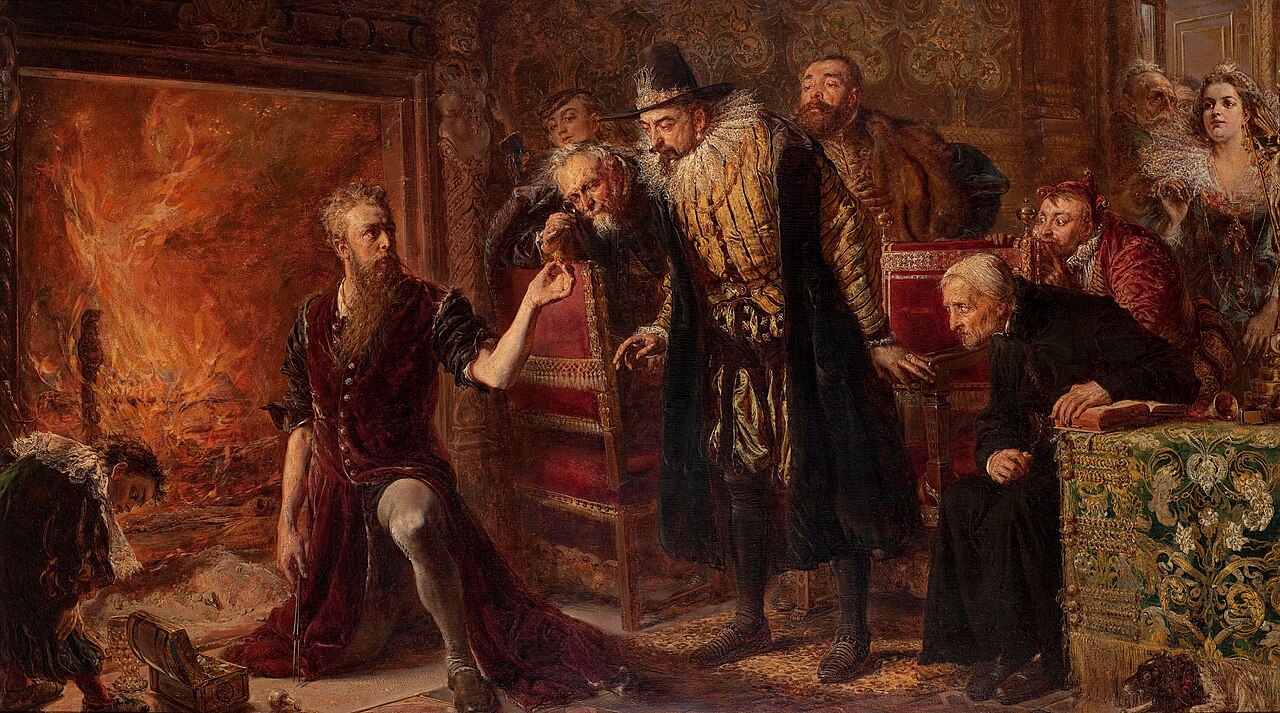
The alchemist works simultaneously on two levels: the outer (chemical operations on matter) and the inner (psychological and spiritual purification). The gold sought is not merely physical but ontological — the perfection of one’s own nature. This dual reading was excavated most thoroughly by carl-jung, who spent decades demonstrating that alchemical symbolism is a projection of the individuation process.
The Great Work (Magnum Opus)
The central alchemical project — the transformation of the prima materia (raw, chaotic, undifferentiated matter) into the Philosopher’s Stone or Lapis Philosophorum — the perfected substance that transmutes everything it touches.
The Stages
While alchemists varied in their descriptions, three (or four) stages are commonly recognized:
-
Nigredo (Blackening) — putrefaction, dissolution, the death of the old form. Psychologically: confronting the jung-and-the-shadow, descending into depression, grief, and the dismemberment of illusions. “You must kill the old king.” This is the stage most people flee from. See: shadow-integration.
-
Albedo (Whitening) — purification, washing, the emergence of clarity from chaos. Psychologically: the separation of the essential from the accidental, beginning to see clearly. The silver stage — not yet gold, but pure.
-
Citrinitas (Yellowing) — sometimes omitted, this represents the dawning of solar consciousness. The transition from passive purity (silver/moon) to active illumination (gold/sun).
-
Rubedo (Reddening) — the final stage: integration, the union of opposites, the production of the Stone. Psychologically: the completion of individuation — not the dominance of spirit over matter, but the marriage of the two. The reunification of what was separated. See: non-dual-recognition.
Solve et Coagula
“Dissolve and recombine” — the fundamental alchemical operation. Break down existing structures (solve) and reform them in a higher, more integrated pattern (coagula). Not destruction for its own sake but dissolution in service of transformation. This is the alchemical expression of regeneration: the twelve punishments must be expelled (solved) before the ten divine powers can enter (coagulated).
The Hermetic Roots
Alchemy inherits from hermeticism:
- “As above, so below” — the microcosm reflects the macrocosm
- The world as a living, ensouled entity that can be worked with, not merely upon
- The practitioner must transform themselves to transform matter
- self-knowledge-as-god-knowledge — the alchemist’s self-transformation is simultaneously a participation in the divine process
The legendary Emerald Tablet (attributed to hermes-trismegistus) is the foundational alchemical text: “That which is above is like that which is below, and that which is below is like that which is above, to perform the miracles of the one thing.”
Jung’s Reading
carl-jung understood alchemy as the Western tradition’s most elaborate symbolic language for the process he called individuation:
| Alchemical Symbol | Jungian Interpretation |
|---|---|
| Prima materia | The unconscious in its raw state |
| Nigredo | Shadow confrontation |
| Albedo | Anima/Animus integration |
| Rubedo | The Self — the union of opposites |
| The Stone | Wholeness — the integrated personality |
| Gold | The realized Self |
| Mercury | The transformative agent — the unconscious itself |
| The Marriage | Coniunctio — the union of masculine and feminine |
Jung wrote: “The alchemical opus deals in the main not just with chemical experiments as such, but with something resembling psychic processes expressed in pseudo-chemical language.”
Historical Lineage
- Hellenistic Egypt (3rd century CE): Greco-Egyptian alchemists (Zosimos of Panopolis, Maria the Jewess) working in the same Alexandrian milieu that produced hermeticism and gnosticism
- Islamic Golden Age (8th-13th century): Jabir ibn Hayyan (Geber), the development of laboratory techniques alongside spiritual interpretation
- Medieval Europe (13th-16th century): Albertus Magnus, Roger Bacon, Nicolas Flamel — alchemy as the hidden current within Christendom
- Renaissance (16th-17th century): Paracelsus unifies medicine and alchemy; the Rosicrucian movement carries alchemical symbolism into esoteric Christianity
- Modern: Jung’s psychological reinterpretation; contemporary interest in alchemy as a symbolic language for transformation
Connections
- hermeticism — the philosophical parent tradition
- hermes-trismegistus — the attributed founder
- carl-jung — the modern interpreter of alchemical symbolism
- shadow-integration — nigredo as the confrontation with the shadow
- regeneration — solve et coagula as the Hermetic rebirth process
- non-dual-recognition — the coniunctio as the union of opposites
- neoplatonism — the metaphysical framework
- self-knowledge-as-god-knowledge — the alchemist transforms themselves
- jung-and-the-shadow — the psychological parallel to nigredo