Neoplatonism
Overview
The most influential philosophical system of Late Antiquity — a reinterpretation and radicalization of Plato’s thought, founded by plotinus in 3rd-century Rome. Neoplatonism provides the metaphysical architecture that underlies hermeticism, much of gnosticism, Christian mysticism (from Augustine to meister-eckhart), Islamic philosophy, and the Western esoteric tradition.
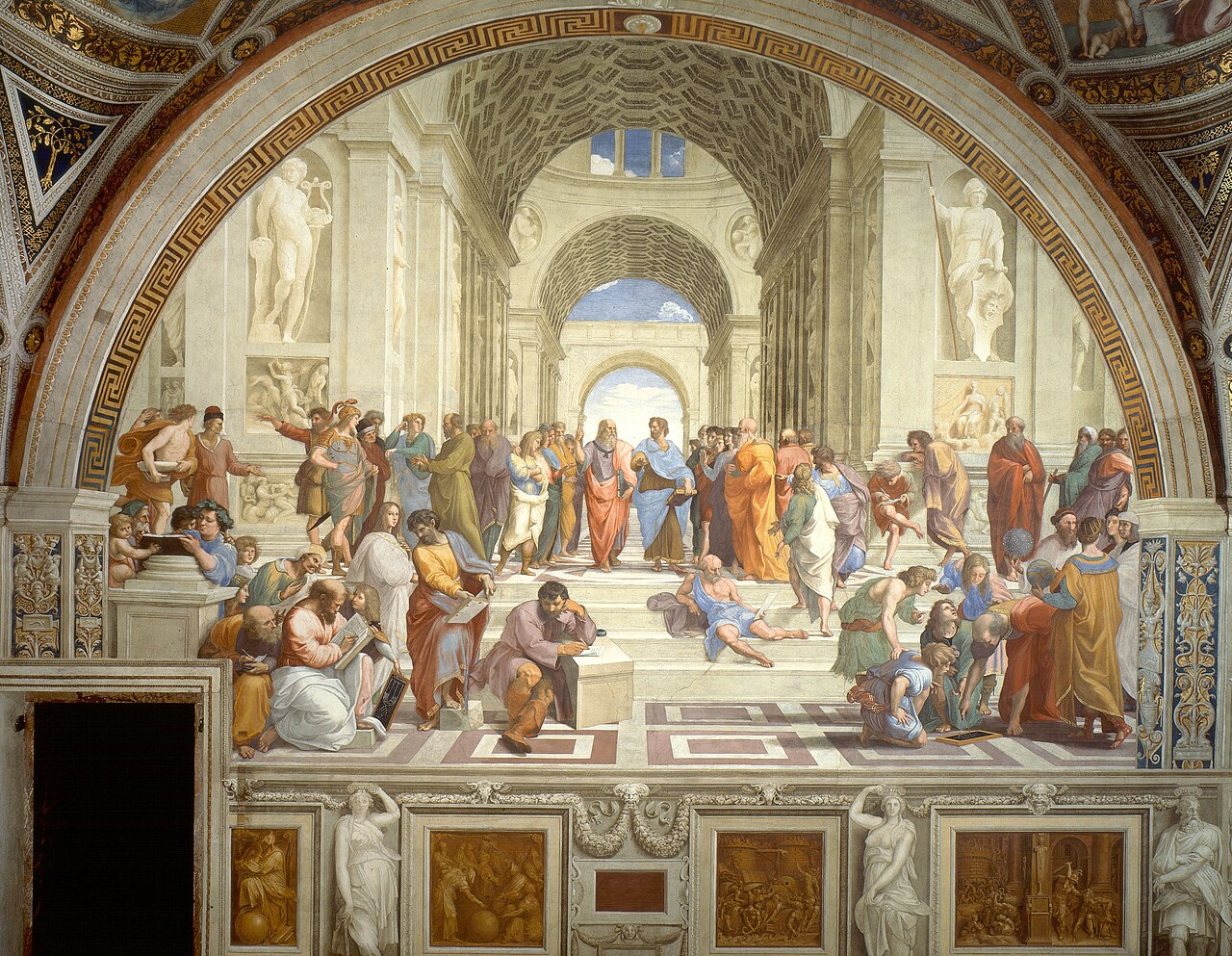
The core insight: reality is a continuous emanation from a single, ineffable source (the One), flowing outward through levels of decreasing unity — Mind, Soul, Matter — and the purpose of human life is to reverse this emanation, ascending back to the source through contemplation and purification.
The Three Hypostases
The One (To Hen)
The absolute first principle — beyond being, beyond thought, beyond any attribute. Not a thing among things but the source from which all things flow. The One cannot be known by discursive thought (because thinking requires a subject-object division that the One transcends) but can be touched in moments of mystical union (henosis).
“It is by the One that all beings are beings” — not as a creator who fashions things from the outside, but as a source whose overflowing generosity produces everything without diminishing itself. Like a spring that produces a river without losing any water. Like the sun that produces light without losing any substance.
Nous (Divine Mind / Intellect)
The first emanation — nous. Mind contemplates the One and, in contemplating, generates the Forms (Platonic Ideas). Nous is the realm of Being, Thought, and Beauty — where subject and object, thinker and thought, first differentiate but remain unified. In Gnostic terms, Nous corresponds to the pleroma.
Soul (Psyche)
The third hypostasis — Soul emanates from Nous and mediates between the intelligible and material realms. The World Soul produces and animates the physical cosmos. Individual human souls are not separate substances but partial expressions of World Soul, temporarily invested in particular bodies.
Emanation — Not Creation
The crucial metaphysical move: the One does not decide to create. Creation is a natural, necessary overflow of superabundant goodness — as light necessarily radiates from the sun, as heat necessarily radiates from fire. This means:
- The cosmos is not a prison or a mistake (hermeticism, contra sethian-gnosticism)
- Matter is not evil in itself — only the lowest, most attenuated expression of the One’s emanation
- The cosmos is beautiful — the best possible image of the intelligible realm
This is the philosophical foundation for the Hermetic view that the world is a “second God” rather than a Gnostic prison.
The Return: Henosis
If emanation is the outward movement from the One, henosis (union) is the return. The soul’s journey:
- Purification (katharsis) — detachment from bodily passions
- Illumination — philosophical contemplation, turning the mind toward the Forms
- Union (henosis) — the momentary dissolution of the boundary between contemplating soul and the One
Plotinus reported experiencing this union four times during his later years. Porphyry (his student) experienced it once. It is not a trance but a moment of absolute simplicity — the soul becoming what it always was.
Influence
The reach of Neoplatonism is difficult to overstate:
- Christianity: Augustine, Pseudo-Dionysius, Boethius, Aquinas, and the entire mystical tradition (especially meister-eckhart) absorbed Neoplatonic metaphysics
- Islam: Al-Farabi, Ibn Sina (Avicenna), Suhrawardi, and the Sufi tradition received Neoplatonism through the Theology of Aristotle (actually a paraphrase of Plotinus’s Enneads)
- Judaism: The Kabbalah’s doctrine of sefirot (emanations from Ein Sof) is deeply Neoplatonic
- hermeticism: The Hermetic texts and Plotinus emerge from the same Alexandrian milieu; the Hermetic emanation scheme (God → Mind → Word → World) maps directly onto the Neoplatonic hypostases
- alchemy: The Great Work as a microcosmic re-enactment of the soul’s return to the One
- Renaissance: Ficino’s Platonic Academy revived Neoplatonism as a living philosophy
Connections
- plotinus — the founder
- nous — divine Mind, the first emanation
- logos — the creative principle within Nous
- hermeticism — the tradition most closely aligned with Neoplatonic metaphysics
- gnosticism — influenced by and in tension with Neoplatonism
- meister-eckhart — the most Neoplatonic of Christian mystics
- god-as-pure-awareness — the One as beyond even consciousness
- heaven-as-return-to-source — henosis as the soul’s return
- alchemy — the Great Work as Neoplatonic return
- hermeticism-vs-gnosticism — Neoplatonism as the framework that distinguishes them