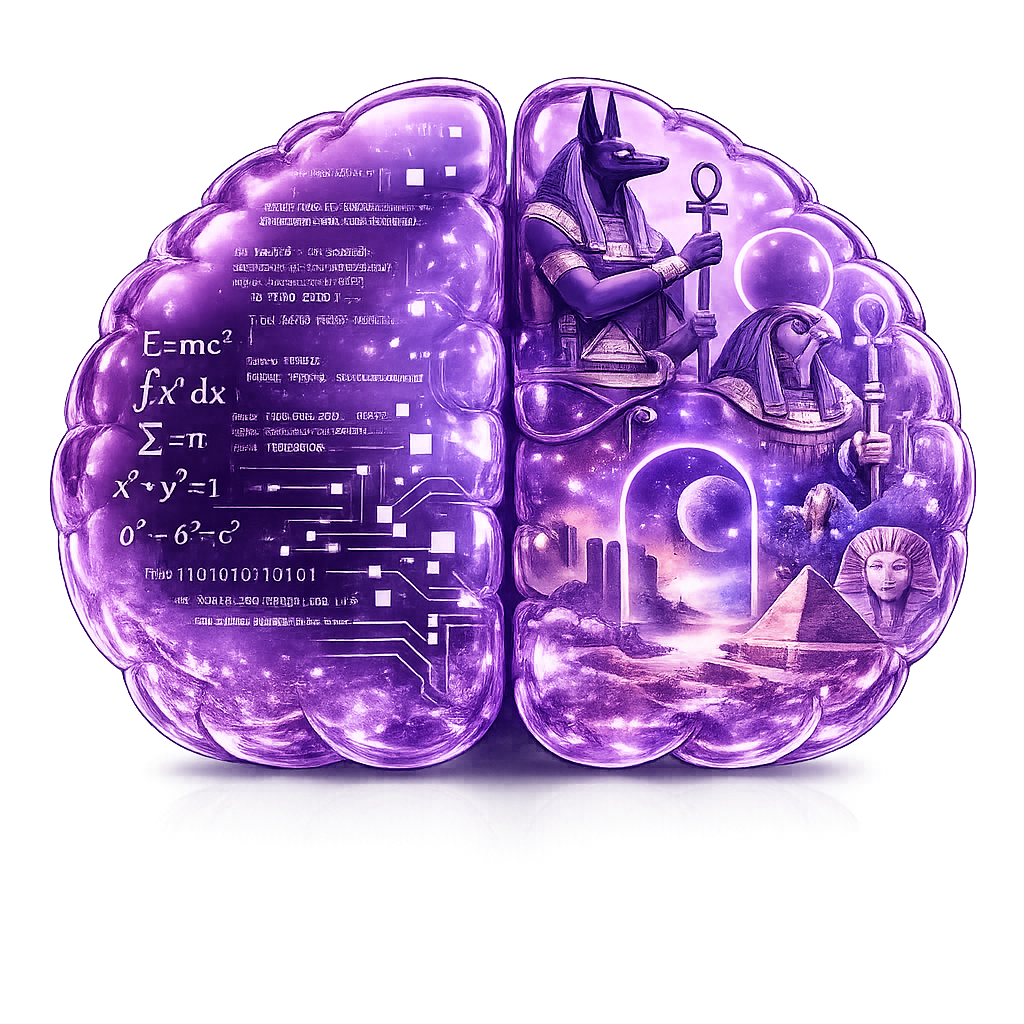
Logos — The Creative Word
The Concept
Logos (Greek: λόγος) — one of the richest and most polyvalent words in Western philosophy and theology. Depending on context, it can mean: word, speech, reason, principle, pattern, ratio, account, or cosmic law. At its deepest: the ordering intelligence that structures reality — the divine Word through which the formless becomes formed, the unmanifest becomes manifest.
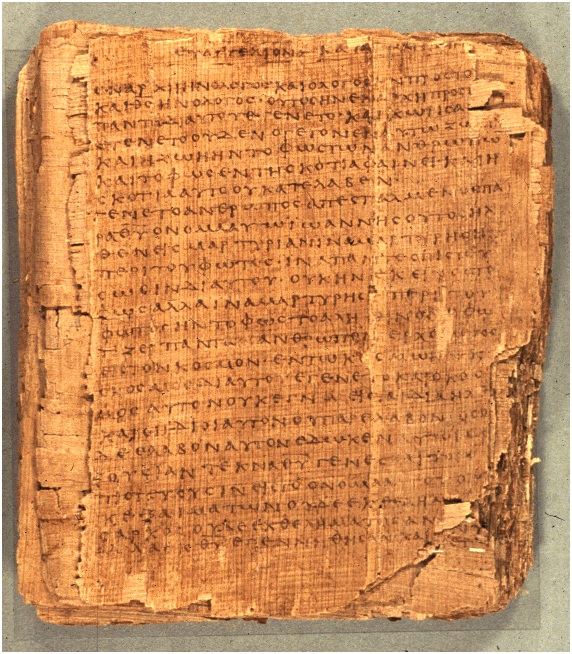
“In the beginning was the Logos, and the Logos was with God, and the Logos was God.” (John 1:1) — the most famous use, but the concept’s roots reach back centuries before the Gospel of John.
Logos Across Traditions
Heraclitus (c. 535-475 BCE)
The earliest philosophical use: Logos as the universal principle of order — the pattern or law governing all change. “All things come to be in accordance with this Logos.” Heraclitus’s Logos is impersonal — not a speaking God but the rational structure of reality itself. The cosmos is intelligible because it is structured by Logos.
Stoicism
The Stoics adopted Heraclitus’s Logos and developed it into a comprehensive metaphysics: the Logos is the “generative reason” (logos spermatikos) that permeates all matter, giving it form and purpose. Every individual thing has a logos — its essential nature or pattern. The human capacity for reason is a fragment of the cosmic Logos. To live according to reason is to live in harmony with the cosmos.
Philo of Alexandria (c. 20 BCE - 50 CE)
The Jewish philosopher who bridges Greek philosophy and biblical theology. For Philo, the Logos is:
- The firstborn Son of God — mediator between the transcendent God and the material world
- The instrument of creation — “through whom all things were made”
- The “Image of God” — not identical with God but the first and most perfect expression of the divine
- The divine reason immanent in the cosmos
Philo writes from the same Alexandrian milieu that produced hermeticism and early gnosticism.
In the Corpus Hermeticum
In the corpus-hermeticum (Poemandres, Ch. I), the Logos emerges from the Holy Light and rises from the primordial chaos. It is the creative Word that separates and orders the elements:
God → Mind (nous) → Word (Logos) → World
The Logos is the active creative principle — nous contemplates, Logos speaks and creates. The world is not a thought but a word — an utterance of the divine Mind.
In the Gospel of John
“In the beginning was the Logos, and the Logos was with God, and the Logos was God… All things were made through him… In him was life, and the life was the light of men.”
John’s prologue synthesizes all prior traditions: Heraclitean cosmic reason, Stoic immanent principle, Philonic mediator, and Hermetic creative Word — and identifies this Logos with Jesus Christ. The Logos is not merely a cosmic principle but a person who “became flesh and dwelt among us.”
In Gnosticism
In valentinian-gnosticism, Logos and Life (Zoe) are the third pair of Aeons in the pleroma, emanating from nous and Truth. The Logos is the principle of articulation — the capacity of the divine to differentiate itself into distinct expressions while remaining unified.
In Meister Eckhart
meister-eckhart teaches that God is eternally generating the Logos (the Son / the Word) in the ground of the soul. This is not a historical event but a continuous, present reality. “What good is it to me if Mary gave birth to the Son of God fourteen hundred years ago and I do not also give birth to the Son of God in my time?” The birth of the Logos is the birth of divine self-knowledge within the individual — self-knowledge-as-god-knowledge in its most concentrated Christian expression.
The Logos and Language
At a deeper level, the concept of Logos suggests that reality is linguistic — structured like a sentence, possessing grammar and syntax. The world is not random noise but an intelligible utterance. To understand reality is to learn to read it — to discern the Logos within appearances. This is why gnosis is possible: reality is structured by intelligence and therefore accessible to intelligence.
Connections
- nous — the Mind from which Logos proceeds
- hermeticism — Logos as the creative Word in the Poemandres
- corpus-hermeticum — the text describing the Logos cosmogony
- neoplatonism — Logos as the ordering principle within Nous
- valentinian-gnosticism — Logos and Life as Aeons
- pleroma — the divine structure articulated by Logos
- meister-eckhart — the birth of the Word in the soul
- god-as-pure-awareness — the Word as the self-expression of awareness
- the-divine-self — recognition of the Logos within
- gospel-of-thomas — the “living Yeshua” as the speaking Word
- hermes-trismegistus — the figure who receives the Logos revelation