Nous — Divine Mind
The Concept
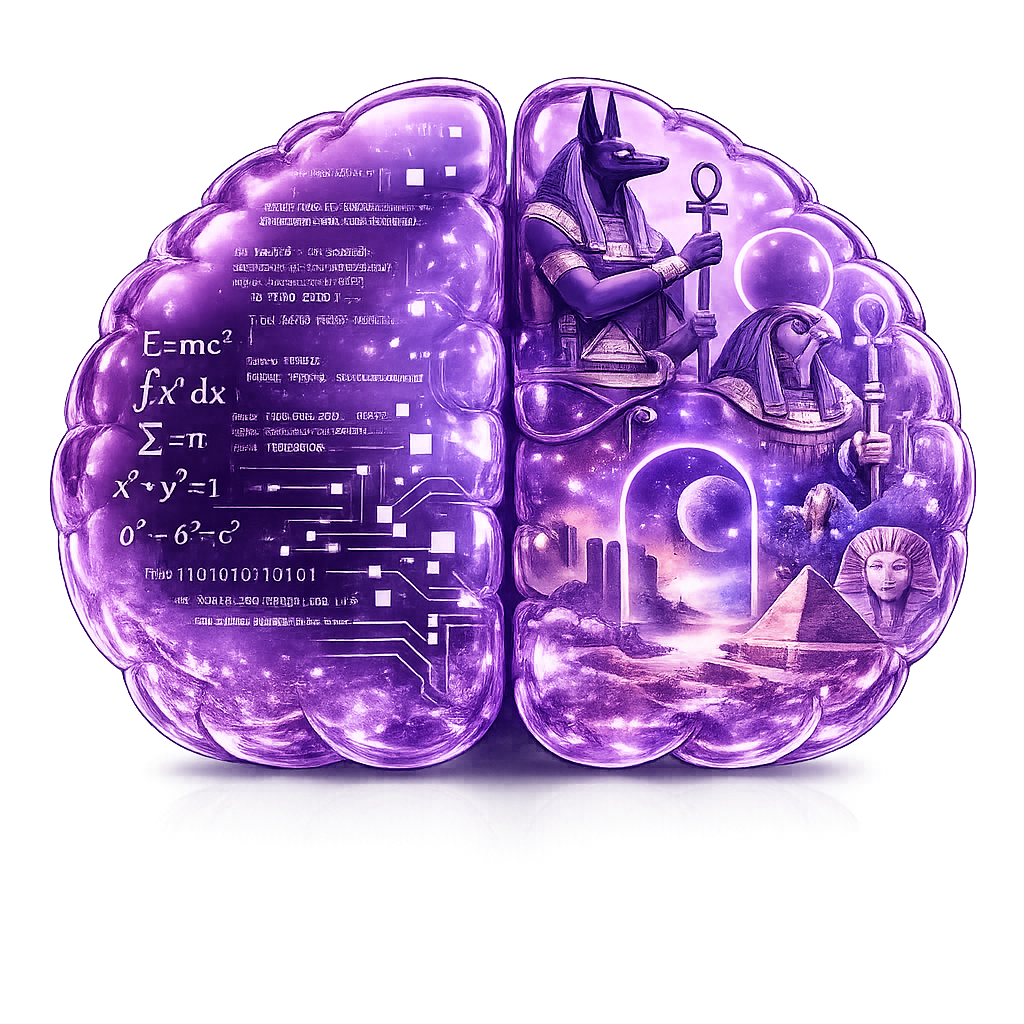
Nous (Greek: νοῦς, “mind,” “intellect,” or “intelligence”) — one of the most important concepts in ancient philosophy, carrying different but related meanings across traditions. At its deepest: the divine Mind that is the first emanation from the ultimate source, the medium through which all Forms and Ideas exist, and the substance from which human consciousness derives.
Nous is not merely “thinking” — it is the capacity for direct, immediate knowing that transcends discursive reasoning. Where ordinary thought moves step by step (A, therefore B, therefore C), Nous grasps the whole at once. It is intellectual intuition — seeing the truth directly, without mediation.
Nous in the Major Traditions
In Neoplatonism
For plotinus, Nous is the second hypostasis — the first emanation from the One. It arises when the One’s overflowing generosity produces something that turns back and contemplates its source. In that contemplation, the Platonic Forms (Ideas) come into being:
- Nous is simultaneously thinking and being — thought and reality are not separate
- It contains all the Forms: Beauty, Justice, Truth, Life, Mind
- It is the realm of unity-in-multiplicity — many Forms, one Mind
- It stands between the utter unity of the One and the multiplicity of the Soul
See: neoplatonism.
In Hermeticism
In the corpus-hermeticum, Nous appears in two key roles:
-
Poemandres (“Shepherd of Men”) — the cosmic Mind that appears to Hermes in the opening revelation. “I am Poemandres, the Mind of Sovereignty.” Nous is not merely a philosophical concept but a living divine intelligence that communicates, teaches, and initiates.
-
Chapter XI — “Mind to Hermes” — the most radical statement: God is Mind. Not a God who possesses mind, but Mind itself as the divine substance. “If you do not make yourself equal to God, you cannot understand God.” This is the text behind god-as-pure-awareness.
The Hermetic Nous is also the substance of the human mind — when hermes-trismegistus says “the man of mind, let him recognise himself,” he means: the human being who recognizes that their own mind-nature is of the same substance as the divine Mind has achieved self-knowledge-as-god-knowledge.
In Aristotle
For Aristotle, nous is the highest capacity of the soul — the power of intellectual intuition that grasps first principles directly (as opposed to dianoia, discursive reasoning). His mysterious statement in De Anima: “Mind comes in from outside” (thurathen) — suggesting that nous is not produced by the body but enters it from a transcendent source.
In Gnosticism
In valentinian-gnosticism, Nous (Mind) and Aletheia (Truth) are the first pair of Aeons emanated from the Father — the closest to the source, the only Aeon that knows the Father directly. All other Aeons know the Father only through Nous. See: pleroma.
In Thunder, Perfect Mind
thunder-perfect-mind — “Perfect Mind” (nous teleios) — the complete, undivided intelligence speaking through paradox. Nous here is not analytical intellect but the divine knowing that encompasses and transcends all categories.
Nous and Consciousness
The concept of Nous bridges the ancient and modern:
- What the ancients called Nous, contemporary consciousness studies might call “pure awareness” or “witnessing consciousness” — the knowing that precedes and underlies all particular thoughts
- ramana-maharshi’s self-inquiry (“Who am I?”) leads back to this: the awareness that remains when all thought-objects dissolve
- meister-eckhart’s “ground of the soul” is functionally identical to Nous — the deepest stratum of the mind where human and divine are one
Connections
- neoplatonism — Nous as the second hypostasis
- plotinus — the philosopher who most fully articulated Nous
- hermeticism — God as Mind, Mind as divine substance
- corpus-hermeticum — Poemandres as the Mind of Sovereignty
- hermes-trismegistus — the figure who receives Nous’s revelation
- god-as-pure-awareness — Nous as pure knowing
- self-knowledge-as-god-knowledge — recognizing one’s own mind as divine Mind
- logos — the Word that proceeds from Nous
- pleroma — Nous as the first Aeon
- thunder-perfect-mind — Perfect Mind speaking in paradox
- meister-eckhart — the ground of the soul as Nous
- ramana-maharshi — self-inquiry as the path to pure Nous