
The Desert Fathers
The Tradition
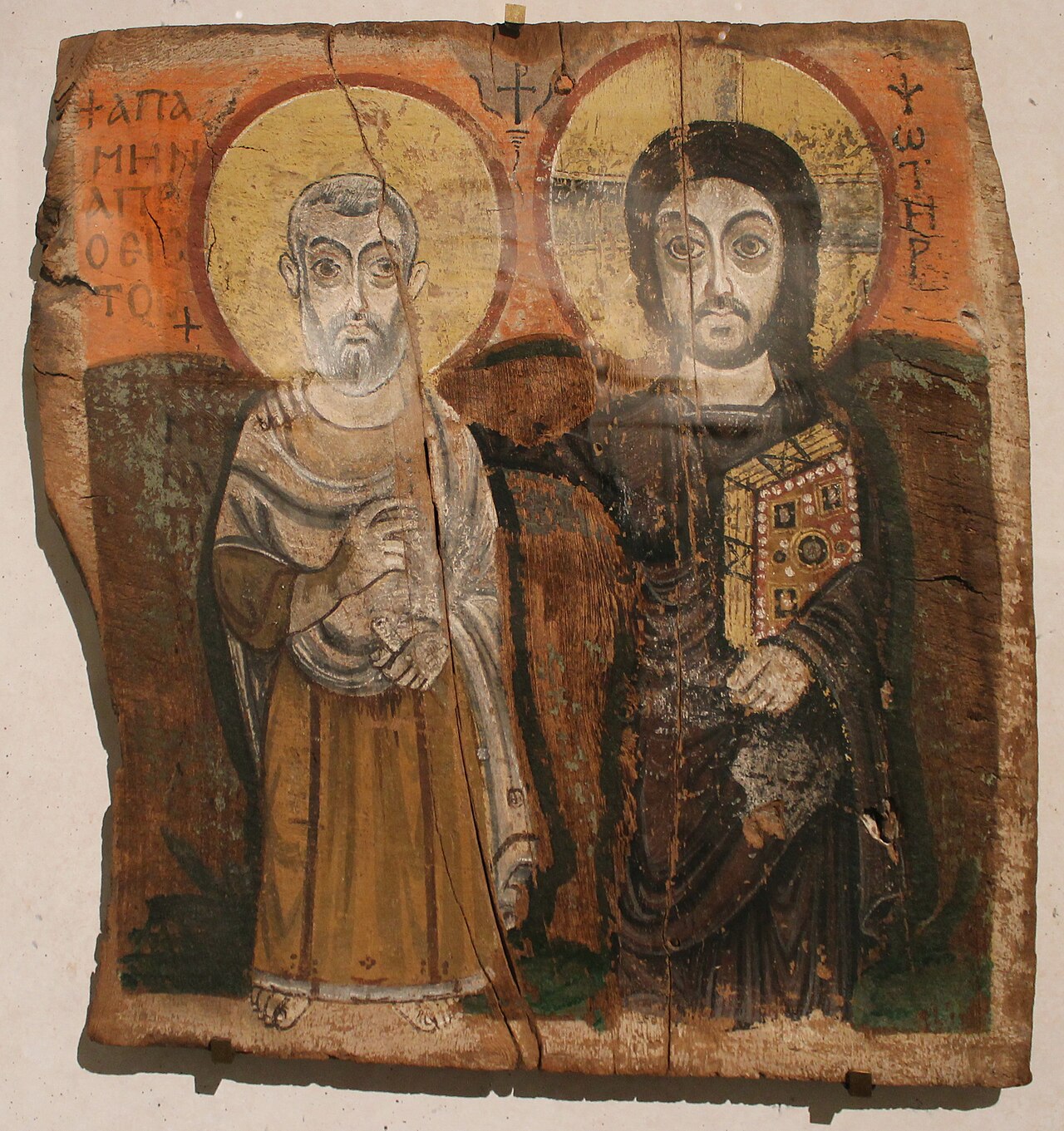
The Desert Fathers (and Mothers — the ammas alongside the abbas) were early Christian hermits, monks, and ascetics who withdrew into the deserts of Egypt, Syria, and Palestine beginning in the 3rd century CE. Their sayings, collected in the Apophthegmata Patrum (Sayings of the Desert Fathers), constitute one of the most psychologically sophisticated bodies of spiritual literature in the Western tradition.
Key figures include Anthony the Great (c. 251-356), Evagrius Ponticus (345-399), John Cassian (c. 360-435), and the amma Syncletica of Alexandria.
”Know Your Passions”
The Desert Fathers’ central instruction was not to destroy the passions (apatheia is often mistranslated as “without passion”) but to know them — to bring them into the light of awareness so they lose their compulsive, unconscious power. This is shadow-integration expressed in 4th-century language.
Evagrius Ponticus mapped eight principal logismoi (thought-patterns or passions): gluttony, lust, avarice, sadness, anger, acedia (spiritual torpor), vainglory, and pride. These are not sins to be punished but movements of the soul to be observed. The practice is essentially contemplative self-awareness — watching the arising and passing of inner states without being captured by them.
“A monk who does not know his own inner movements will not know the movements of the enemy.” — Evagrius Ponticus
This is the outer-world-as-mirror principle applied to spiritual combat: what you cannot see in yourself will ambush you from outside.
The Method: Stillness and Attention
The Desert Fathers’ primary method was hesychia — stillness, inner silence, watchful attention. Not thinking about God, but attending to what arises in the space of awareness. This practice is structurally identical to what advaita-vedanta calls atma-vichara (self-inquiry) and what ramana-maharshi taught as “Who am I?”
The goal was the same: to discover that beneath all the movements of passion and thought, there is an unchanging witness — pure awareness. The Desert Fathers called this the nous returning to God. See: god-as-pure-awareness, nous.
The Egyptian Connection
The Desert Fathers emerged in Egypt — the same soil that produced hermeticism. This is not coincidental. The monastic movement arose in the same cultural landscape as the Hermetic schools of Alexandria. Clement of Alexandria and Origen — both deeply influenced by Platonic and possibly Hermetic thought — were the theological predecessors of the desert movement.
The overlap is striking: both traditions emphasize interior knowledge over external ritual, both describe a return to divine awareness through self-knowledge (self-knowledge-as-god-knowledge), and both locate the obstacle in ignorance rather than inherent sinfulness (see: ignorance-as-root-evil).
Why They Matter for This Exploration
The Desert Fathers represent the practical dimension of the insights explored in the-divine-self and dialogue-on-the-divine-self. Where the dialogue maps the territory philosophically, the desert tradition provides the method: sustained attention to inner movements, honest inventory of desires and shadow material, and the gradual discovery that awareness itself — the witness of all these movements — is what the traditions call God.
Their insistence on “knowing your passions” rather than suppressing them anticipates Jung’s shadow work by 1,500 years.
Connections
- shadow-integration — “know your passions” as proto-shadow work
- outer-world-as-mirror — unconscious passions projected outward
- god-as-pure-awareness — hesychia as the practice of resting in pure awareness
- self-knowledge-as-god-knowledge — the nous returning to God through self-knowledge
- ignorance-as-root-evil — ignorance of inner movements as the root problem
- hermeticism — shared Egyptian soil, parallel emphasis on interior gnosis
- nous — the faculty of direct knowing, central to both Evagrius and the Hermetica
- advaita-vedanta — structural parallels in contemplative method
- ramana-maharshi — “Who am I?” as the same inquiry in different language
- paul-of-tarsus — the apostolic tradition the Desert Fathers inherited
- meister-eckhart — the Rhineland mystic tradition that grew from desert spirituality
- Carl Jung — modern inheritor of the “know thyself” imperative