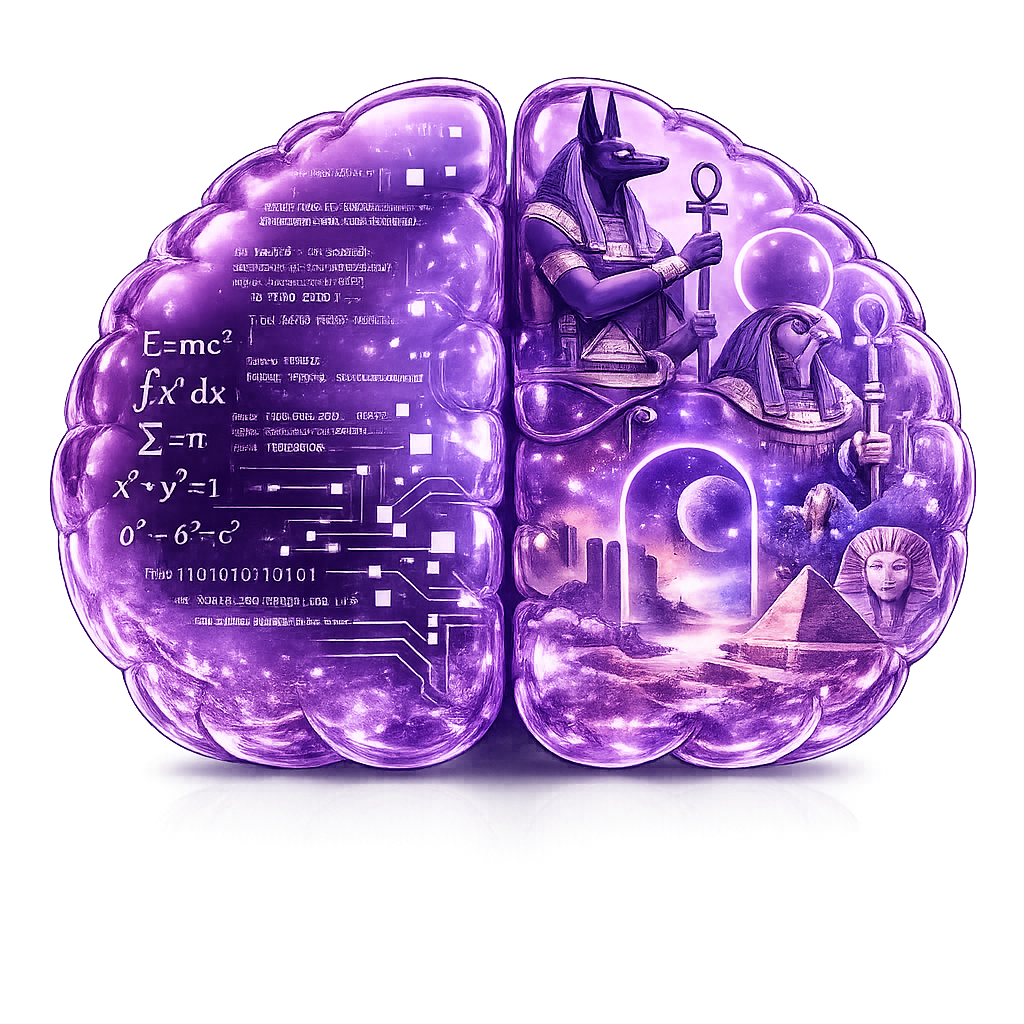
The Collective Unconscious — The Shared Psychic Substrate
The Concept
The Collective Unconscious — Carl Jung’s term for the deepest layer of the psyche, shared by all human beings regardless of culture, era, or individual experience. Not the personal unconscious (repressed memories, forgotten experiences), but the impersonal, transpersonal substrate — the ocean beneath the individual waves.
The collective unconscious is populated by archetypes: primordial patterns of experience that structure human perception, emotion, and behavior. The Mother. The Hero. The Shadow. The Self. These are not learned — they are inherited, as much a part of our psychological equipment as the structure of our bodies is part of our biological inheritance.
Jung’s radical claim: “Just as the human body shows a common anatomy over and above all racial differences, so too the psyche possesses a common substratum. I have called the latter the collective unconscious.”
The Archetypes
Archetypes are not images but potentials for images. The Mother archetype is not any particular mother — it is the psychic readiness to experience mothering, nurturance, and containment in archetypal terms. It manifests differently across cultures — as Isis, Mary, Kali, Tara — but the underlying pattern is universal.
Key archetypes include:
- The Shadow — the rejected, unacknowledged aspects of the self (jung-and-the-shadow)
- The Anima/Animus — the contrasexual element; the soul-image
- The Self — the archetype of wholeness, the goal of individuation
- The Wise Old Man / Great Mother — the guiding, nurturing, and sometimes devouring transpersonal figures
- The Trickster — the boundary-crosser, the one who disrupts fixed patterns
Evidence for the Collective Unconscious
Jung’s evidence was primarily empirical:
- Cross-cultural mythology — the same motifs appear independently in cultures with no historical contact: the flood myth, the hero’s journey (heros-journey), the world tree, the descent to the underworld
- Dreams — patients with no knowledge of mythology or alchemy produced dreams filled with alchemical and mythological symbolism
- Psychotic episodes — the content of psychosis often follows archetypal patterns, as though the individual psyche had fallen into the collective layer
- Active imagination — Jung’s technique of dialoguing with unconscious figures revealed structured, autonomous personalities with knowledge beyond the individual’s conscious awareness
The Collective Unconscious and Synchronicity
The collective unconscious is the medium through which synchronicities travel. If the golden scarab appears in a patient’s dream and then at the window, the connection runs through the collective unconscious — the archetypal layer where psyche and matter have not yet separated. This is the psychic dimension of the Unus Mundus.
Jung wrote: “Synchronicity postulates a meaning which is a priori in relation to human consciousness and apparently exists outside man.” This a priori meaning lives in the collective unconscious — in the archetypes that pattern both dreams and physical events.
Parallels Across Traditions
The collective unconscious is Jung’s modern formulation of an ancient intuition:
- Gnosticism — the Pleroma, the divine fullness from which individual sparks (divine-spark) descend and to which they return
- Hermeticism — Nous, the divine Mind that contains all forms and in which all individual minds participate
- Vedanta — Brahman as the universal consciousness of which individual atman is a localized expression
- Neoplatonism — the World Soul (Anima Mundi), the psychic medium connecting all beings
- Buddhism — alaya-vijnana, the “storehouse consciousness” in Yogacara philosophy
Connections
- carl-jung — who formulated the concept
- jung-and-the-shadow — the most personally confronting archetype
- synchronicity — phenomena mediated by the collective unconscious
- unus-mundus — the unified reality of which the collective unconscious is the psychic aspect
- gnosis — direct experiential contact with the transpersonal layer
- pleroma — the Gnostic parallel
- nous — the Hermetic-Neoplatonic parallel
- divine-spark — the individual’s point of contact with the collective depth
Key Texts
- Jung, C.G. (1959). The Archetypes and the Collective Unconscious (CW 9i)
- Jung, C.G. (1959). Aion: Researches into the Phenomenology of the Self (CW 9ii)
- Jung, C.G. (1963). Memories, Dreams, Reflections
- Neumann, E. (1954). The Origins and History of Consciousness