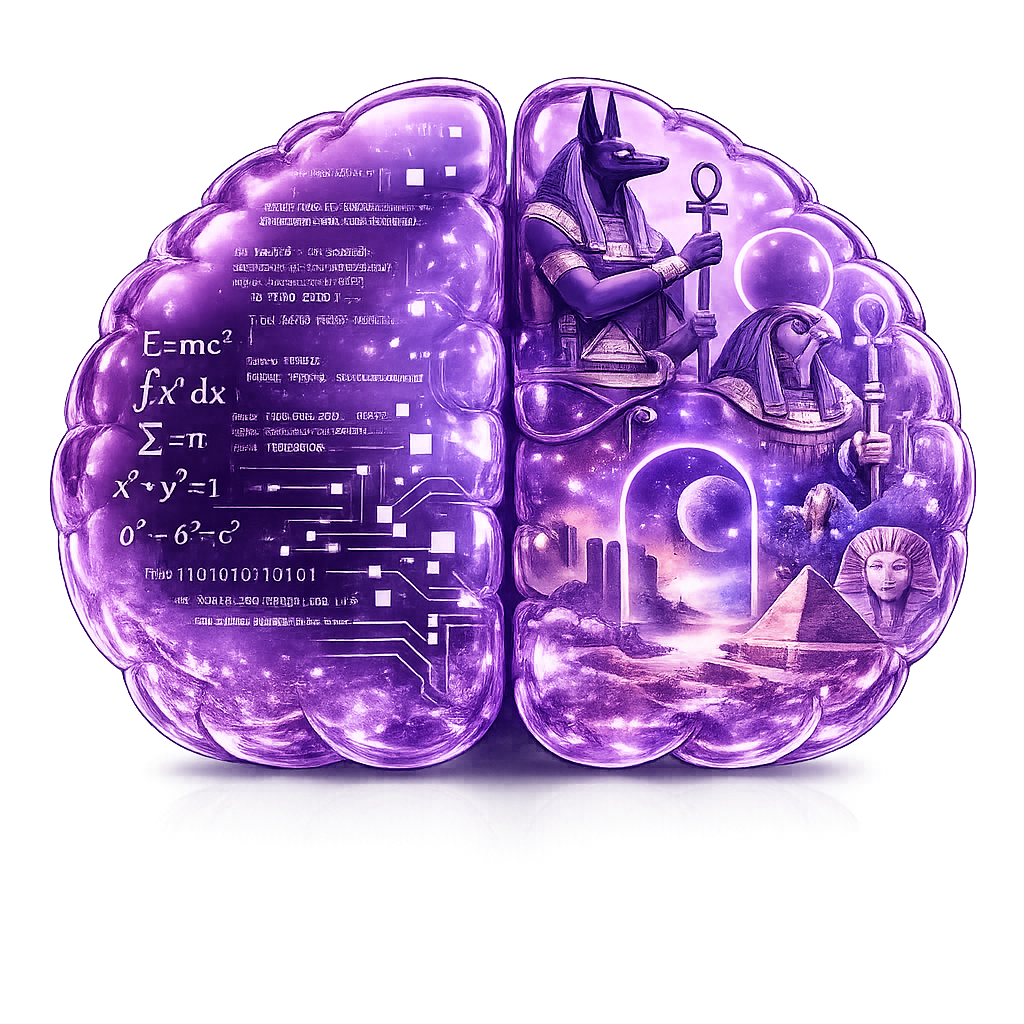
Gnosis — Transformative Knowledge
The Concept
Gnosis (Greek: γνῶσις, “knowledge”) — but not ordinary knowledge. Not the accumulation of facts, not intellectual understanding, not theoretical mastery. Gnosis is direct, experiential, transformative knowing — the kind of knowledge that changes the knower in the act of knowing.
The distinction is crucial:
- Episteme (ἐπιστήμη) — theoretical knowledge; knowing about something
- Gnosis (γνῶσις) — participatory knowledge; knowing by becoming
You can have episteme about fire (its chemical composition, its temperature, its properties). You can only have gnosis of fire by being burned. Gnosis of God is not theology — it is the direct experience of the divine within your own awareness.
Gnosis in the Traditions
In Gnosticism
gnosticism takes its very name from this concept. The Gnostic diagnosis: humanity is trapped in ignorance (ignorance-as-root-evil), and the cure is gnosis — the direct recognition of one’s divine origin and nature. This gnosis is not a reward for correct belief or moral behavior but a revelatory event — a moment of sudden, complete knowing that transforms the soul’s orientation.
The gnosis of the Gnostic is specifically: I am not of this world. I came from the light. My true nature is the substance of the pleroma itself. See: divine-spark.
In Hermeticism
The corpus-hermeticum describes gnosis as the recognition that one’s own mind is of the same substance as the divine Mind (nous): “The man of mind, let him recognise himself.” This is self-knowledge-as-god-knowledge — the deepest self-knowledge opens onto the universal.
Hermetic gnosis is not given by an external savior but achieved through interior work — contemplation, silence, and the purification of the soul. See: regeneration, hermes-trismegistus.
In the Gospel of Thomas
gospel-of-thomas presents gnosis in its most direct form:
- Saying 3: “When you know yourselves, then you will be known”
- Saying 67: “If one who knows the all still feels a personal deficiency, he is completely deficient”
- Saying 108: “Whoever drinks from my mouth will become like me, and I will be that person”
The knower becomes the known. The student becomes the teacher. Gnosis is identity, not information.
In Advaita Vedanta
advaita-vedanta uses the term jnana (cognate with gnosis): the direct recognition that Atman = Brahman. Not a new acquisition but the removal of a misunderstanding. “The Self is always already realized” (ramana-maharshi). Jnana is not learning something new but ceasing to not-know what was always the case.
Gnosis vs. Faith
The Gnostic-Hermetic traditions consistently elevate gnosis above pistis (faith):
- Faith trusts what cannot be directly known — “blessed are those who have not seen and yet believe”
- Gnosis sees directly — “we have come from the light, from the place where the light came into being by itself” (gospel-of-thomas, Saying 50)
This does not necessarily dismiss faith. valentinian-gnosticism recognized faith as a genuine, if lesser, mode of relationship with the divine — the “psychic” level as opposed to the “pneumatic.” But the aspiration is always toward direct knowing.
The Moment of Gnosis
What does gnosis actually feel like? The traditions describe:
- Sudden clarity — the fog of ignorance-as-root-evil lifts instantaneously
- Recognition rather than learning — “I always knew this; I had just forgotten”
- Identity shift — the “I” that knows is not the person but the awareness behind the person
- Compassion — the recognition extends to all beings, not just oneself. See: love-as-consequence-of-gnosis
- Irreversibility — once the snake is seen to be a rope, you cannot un-see it
the-divine-self describes this moment: looking in a mirror and receiving an overwhelmingly clear revelation. The gnosis is not the conclusion of an argument but a direct, unmediated event.
Connections
- gnosticism — the tradition named after this concept
- hermeticism — gnosis as self-recognition
- self-knowledge-as-god-knowledge — the content of gnosis
- ignorance-as-root-evil — what gnosis dissolves
- the-divine-self — a personal moment of gnosis
- gospel-of-thomas — gnosis in its most direct form
- regeneration — gnosis as interior rebirth
- advaita-vedanta — jnana as the parallel concept
- ramana-maharshi — self-inquiry as the path to jnana/gnosis
- non-dual-recognition — the epistemological framework
- love-as-consequence-of-gnosis — what authentic gnosis produces
- divine-spark — what is recognized in the moment of gnosis