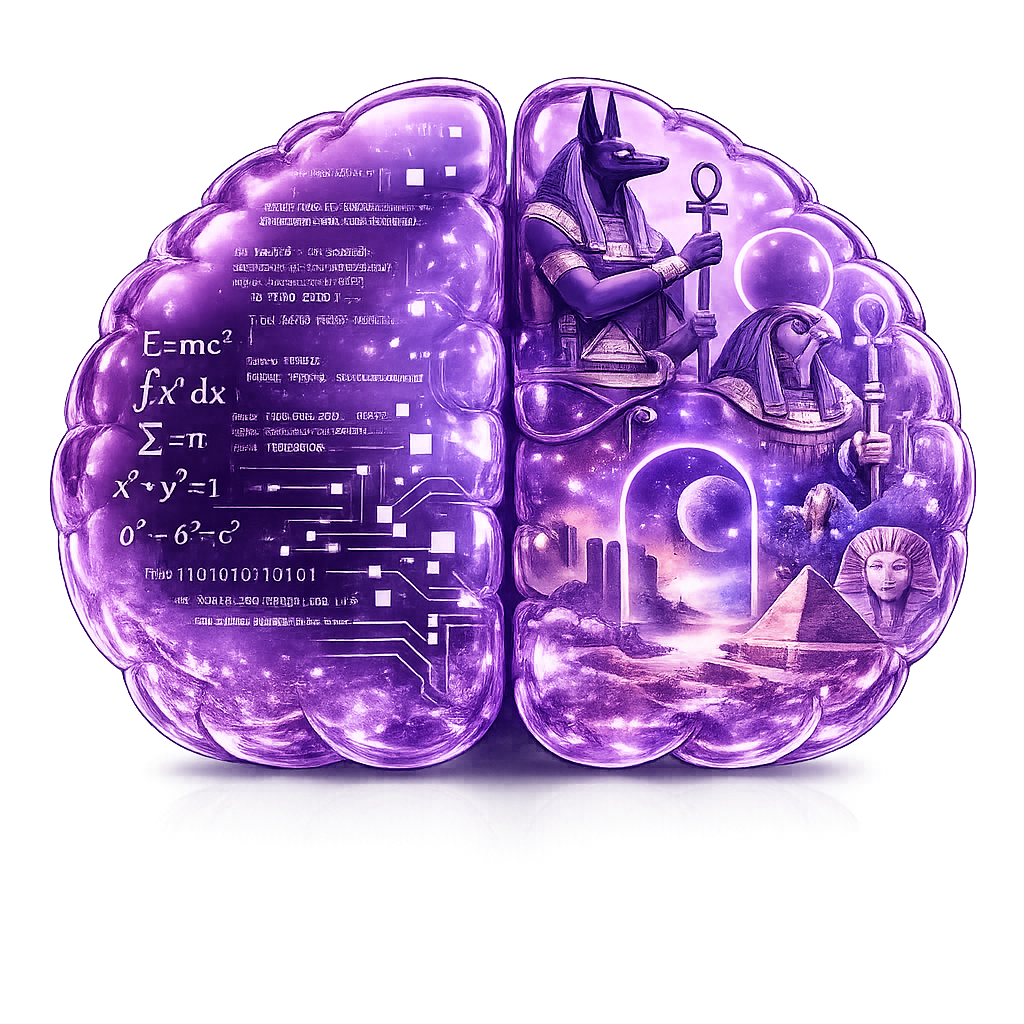
Egyptian Magic
Overview
Egyptian Magic is E.A. Wallis Budge’s survey of magical practices in ancient Egypt, drawing on temple inscriptions, papyri, and archaeological evidence to reconstruct how the Egyptians understood and employed magic. For the Egyptians, magic (heka) was not superstition, fraud, or a degraded form of religion — it was a fundamental force of the cosmos, older than the gods themselves. Heka was the power by which the creator god spoke the world into existence, and its human use was understood as participation in that same creative force. The magician who knew the true names of things wielded real power over them.
Budge catalogs the full range of Egyptian magical practice: the use of divine names and words of power, protective amulets and their specific functions, wax figures and sympathetic magic, dream interpretation, the ritual use of sacred texts, and the magical properties attributed to specific materials and substances. What emerges is not a collection of primitive superstitions but a sophisticated technology of the sacred — a systematic framework for engaging with invisible forces through precise knowledge and ritual action. The Egyptians approached magic with the same methodical rigor they brought to architecture and medicine.
This text is essential for understanding the roots of the Western magical tradition. The Egyptian emphasis on divine names as carriers of power, on ritual precision, on the magician as one who operates through knowledge rather than mere petition — all of these principles pass directly into the Hermetic corpus, the Greek Magical Papyri, and from there into medieval and Renaissance ceremonial magic. When Hermes Trismegistus speaks of the power of sacred words, when alchemists work with sympathetic correspondences, when Kabbalists meditate on divine names, they are working within a framework that originated in the temples of Egypt.
Key Themes
- Heka as cosmic force — Magic is not peripheral to Egyptian religion but central to the operation of the cosmos itself
- The power of divine names — To know the true name of a being is to have power over it; names are not labels but essences
- Words of power — Sacred formulas, precisely spoken, produce real effects in the visible and invisible worlds
- Amulets and material correspondences — Specific materials, shapes, and substances carry inherent magical properties
- The magician as knower — Magical power derives from knowledge (of names, formulas, correspondences), not from arbitrary supernatural gifting
- Magic as technology — A systematic, repeatable, teachable practice with specific methods and expected outcomes
Historical Context
Budge drew on his extensive work with the Egyptian collections of the British Museum, translating and interpreting a wide range of magical texts from across Egyptian history. Egyptian magical practice spans from the Old Kingdom (~2700 BCE) through the Ptolemaic and Roman periods, when it merged with Greek magical traditions in the crucible that also produced Hermeticism. The Greek Magical Papyri, composed in Greco-Roman Egypt, represent the direct continuation of the practices Budge describes, blending Egyptian heka with Greek theurgy and Jewish divine names.
Who Should Read This
Anyone interested in the origins of Western magical tradition, the relationship between magic and religion, or the Egyptian roots of Hermeticism. Valuable for understanding magic not as irrational superstition but as a coherent worldview in which knowledge of hidden correspondences grants real agency in the world.
Connections
- hermeticism — The Hermetic understanding of sacred speech, divine names, and ritual knowledge as paths to power and transformation derives directly from Egyptian magical practice
- alchemy — Alchemical work with sympathetic correspondences, material transmutation, and the marriage of knowledge and practice inherits the Egyptian magical worldview
Further Reading
Full text: Egyptian Magic - Budge