Sophia — Divine Wisdom
The Figure
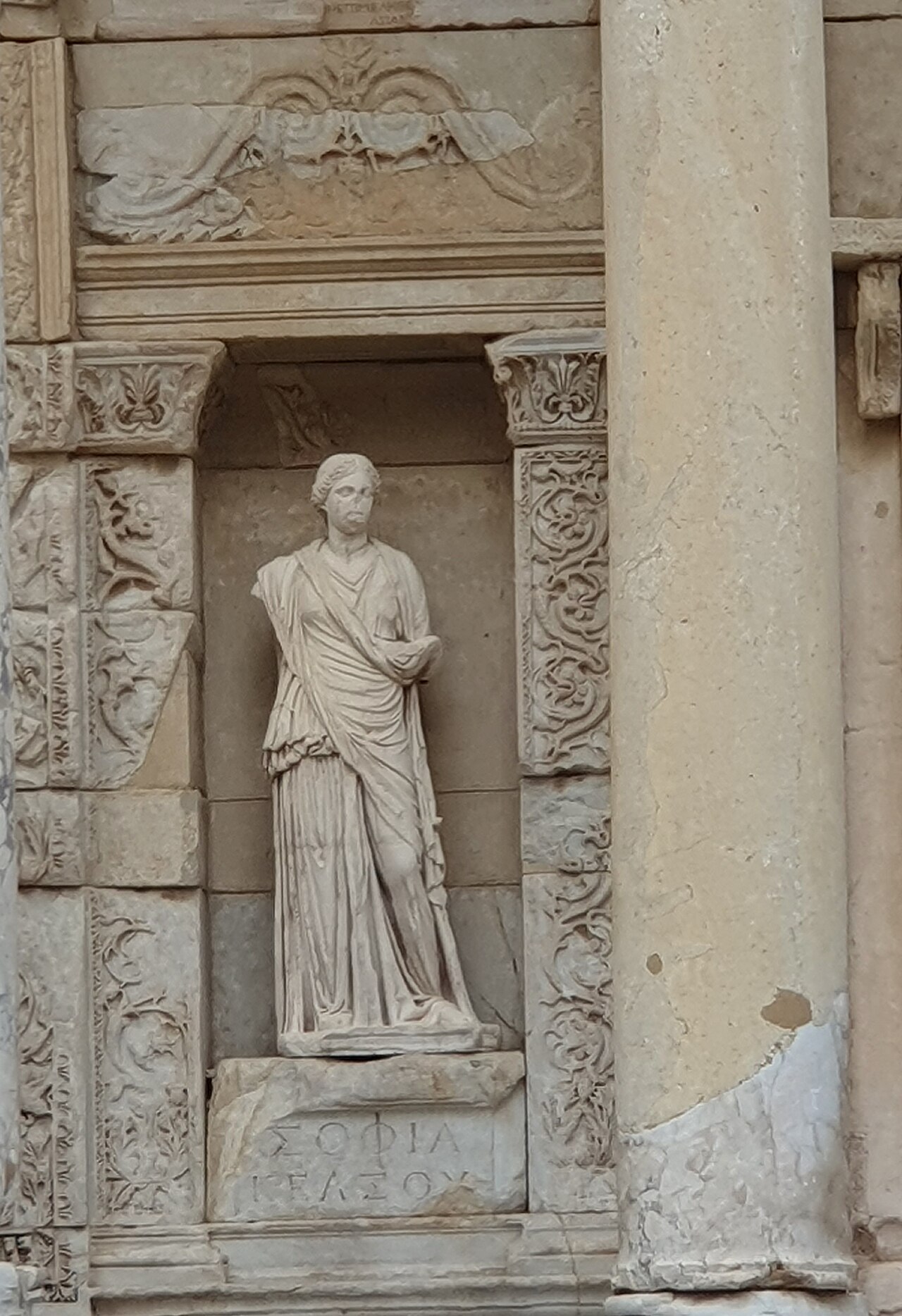
Sophia (Σοφία, Greek for “Wisdom”) — the divine feminine principle whose passion, fall, and redemption drive the entire Gnostic cosmological drama. She is simultaneously a cosmic figure (an Aeon of the pleroma), a philosophical concept (Wisdom personified), and a psychological archetype (the feminine face of divinity, the Anima in carl-jung’s framework).
Sophia appears in nearly every strand of gnosticism, in the Hebrew Wisdom literature (Proverbs 8, Wisdom of Solomon, Sirach), in the corpus-hermeticum, and in the Russian Orthodox tradition of Sophiology. She is the thread connecting the divine feminine across traditions.
The Gnostic Sophia
In Sethian Gnosticism
In the secret-book-of-john and other sethian-gnosticism texts, Sophia’s story is the hinge of the cosmos:
-
The Passion: Sophia, the youngest Aeon of the Pleroma, conceives a desire to know the Father directly — without her consort and without the consent of the Spirit. Her desire is genuine but imbalanced — eros without integration.
-
The Abortion: Her unbalanced desire produces a misshapen offspring — a lion-faced serpent with blazing eyes. She expels this creature from the Pleroma in shame. This is the demiurge — Yaldabaoth.
-
The Repentance: Sophia recognizes her error and repents. Her cries of anguish reach the Pleroma, and divine powers are sent to assist her.
-
The Hidden Gift: When Yaldabaoth’s archons create the human body, Sophia’s stolen light-power is breathed into Adam — the divine-spark. This means that the most divine thing in humanity came from her — from the feminine, from an act of passionate overreaching.
-
The Redemption: In some versions, Sophia is restored to the Pleroma through the intervention of Christ or through the collective return of all the divine sparks she inadvertently scattered.
In Valentinian Gnosticism
valentinus offers a subtler reading: Sophia’s passion was not an error but an excess of love for the Father. Her desire to know the unknowable produced not evil but incompleteness — an emotional residue (Lower Sophia / Achamoth) that becomes the raw material of the world. The Valentinian Sophia is more sympathetic, her fall more poignant. See: valentinian-gnosticism.
Sophia Beyond Gnosticism
Hebrew Wisdom Literature
“The Lord created me at the beginning of his work, the first of his acts of old. Ages ago I was set up, at the first, before the beginning of the earth.” (Proverbs 8:22-23)
Wisdom is personified as a feminine figure who was present at creation, who “plays” before God, who calls to humanity from the streets. She is not a creature but a co-creative principle.
The Shekinah
In Jewish mysticism (Kabbalah), the Shekinah — the feminine indwelling presence of God — parallels Sophia. She is the aspect of the divine that enters into exile with Israel, that descends into the world, that suffers alongside creation. The tikkun (repair) of the cosmos involves the reunion of the Shekinah with the transcendent God — a cosmic bridal chamber.
Thunder, Perfect Mind
In thunder-perfect-mind, the divine feminine speaks in cascading paradoxes: “I am the first and the last. I am the honored and the scorned. I am the whore and the holy.” This may be Sophia in her fullest, most unconstrained voice — containing and transcending all opposites.
Psychological Reading
carl-jung would recognize Sophia as an expression of the Anima — the feminine principle within the psyche that guides the soul toward wholeness. The Gnostic drama of Sophia’s fall, exile, repentance, and restoration maps onto the individuation process:
- The Anima’s initial unconscious projection (the fall)
- The suffering of misidentification (exile)
- The moment of recognition (repentance)
- The integration of the feminine into conscious wholeness (restoration)
Why Sophia Matters
Sophia represents the insight that the divine is not exclusively masculine, transcendent, and remote. The divine also descends, suffers, seeks, and loves excessively. The spark in humanity comes not from the distant, impassible Father but from the passionate, overreaching, feminine Wisdom who could not contain her desire to know.
Connections
- gnosticism — the tradition in which she is central
- sethian-gnosticism — the more radical Sophia narrative
- valentinian-gnosticism — the more sympathetic reading
- secret-book-of-john — her fall and its consequences
- thunder-perfect-mind — possibly Sophia speaking in paradox
- exegesis-on-the-soul — the soul as feminine, paralleling Sophia
- pleroma — her origin
- demiurge — her offspring
- divine-spark — her hidden gift to humanity
- archons — created by her offspring
- carl-jung — the Anima as psychological parallel
- the-veil-of-forgetting — Sophia’s error as the origin of forgetting
- hermeticism-vs-gnosticism — the role of the feminine as a key distinction