The Problem of Evil
The Classical Problem
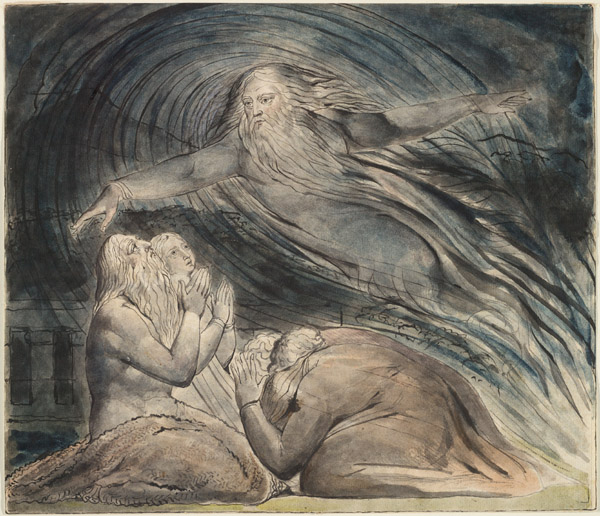
If God is omnipotent, omniscient, and omnibenevolent, why does evil exist? This is the oldest and most persistent challenge to theistic belief:
- God is all-powerful (could prevent evil)
- God is all-knowing (knows evil exists)
- God is all-good (wants to prevent evil)
- Yet evil exists
- Therefore, at least one of premises 1-3 is false
Every tradition explored in this knowledge base offers a response — and the responses diverge radically.
The Non-Dual Resolution
god-as-pure-awareness reframes the problem entirely: if God is not a being separate from the world but the awareness in which all experience arises, then the question shifts from “Why doesn’t God intervene?” to “What is the purpose of limitation itself?”
In the non-dual framework:
- God is not an external agent who could prevent suffering but chooses not to
- God is the medium in which suffering arises — the awareness experiencing itself through every form, including painful ones
- Evil is not a flaw in the system but a consequence of the structure of finite experience
- The the-veil-of-forgetting is what makes both suffering and the overcoming of suffering possible
This is not a theodicy that justifies evil. It is a metaphysical reorientation that dissolves the premise: there is no external God who “should” have done something differently.
The Traditions’ Responses
Hermeticism — Ignorance, Not Evil
hermeticism denies that evil exists as a cosmic force. “The greatest evil among men is ignorance of God” — what appears as evil is the consequence of ignorance-as-root-evil, not of any positive malevolent power. Remove the ignorance and the evil dissolves. The Hermetic cosmos is fundamentally good — a beautiful emanation of divine Mind. Suffering arises from the human failure to recognize this, not from any defect in creation.
Sethian Gnosticism — Cosmic Malice
sethian-gnosticism takes the opposite approach: evil is real, powerful, and structural. The material world was created by the demiurge — a blind, arrogant being who imprisons divine-sparks in matter. The archons actively enforce ignorance. Evil is not merely human error but cosmic conspiracy.
This is the most emotionally honest response to the problem of evil: the world feels like a prison because it is one. The God who allows suffering is not the true God — he is a pretender.
Valentinian Gnosticism — Tragic Error
valentinian-gnosticism offers a middle path: evil arose from sophia’s passionate but unbalanced desire to know the Father. The result was not malice but incompleteness — a world created from emotional residue by an ignorant craftsman. Evil is real but not ultimate; it is the consequence of love overreaching its capacity.
Advaita Vedanta — Appearance, Not Reality
advaita-vedanta holds that evil, like the world itself, is maya — real within its own order of experience but not ultimately real. Brahman is sat-chit-ananda (being-consciousness-bliss) — there is no evil in the ultimate nature of reality. Suffering exists within the dream; the dreamer is untouched.
The Shadow Integration Response
shadow-integration offers the most pragmatically useful response: the question of why evil exists is less important than the question of what to do with the darkness within oneself. The shadow — the repressed, denied, feared aspects of the personality — is not evil but unacknowledged power. Integration of the shadow does not eliminate evil but transforms the individual’s relationship to it.
“Everything is perfect from the higher level” deployed before the inner work = spiritual bypassing. Deployed after = genuine equanimity. The problem of evil is not solved philosophically but worked through experientially.
Connections
- god-as-pure-awareness — the non-dual reframing of the problem
- the-veil-of-forgetting — limitation as the structural condition for both evil and growth
- ignorance-as-root-evil — the Hermetic and Gnostic shared diagnosis
- hermeticism — evil as ignorance, not cosmic force
- sethian-gnosticism — evil as structural, cosmic malice
- valentinian-gnosticism — evil as tragic incompleteness
- demiurge — the Gnostic “false god” who creates a flawed world
- archons — the enforcers of suffering
- shadow-integration — the practical response to inner evil
- advaita-vedanta — evil as appearance within maya
- love-as-consequence-of-gnosis — the ethical response to seeing through evil