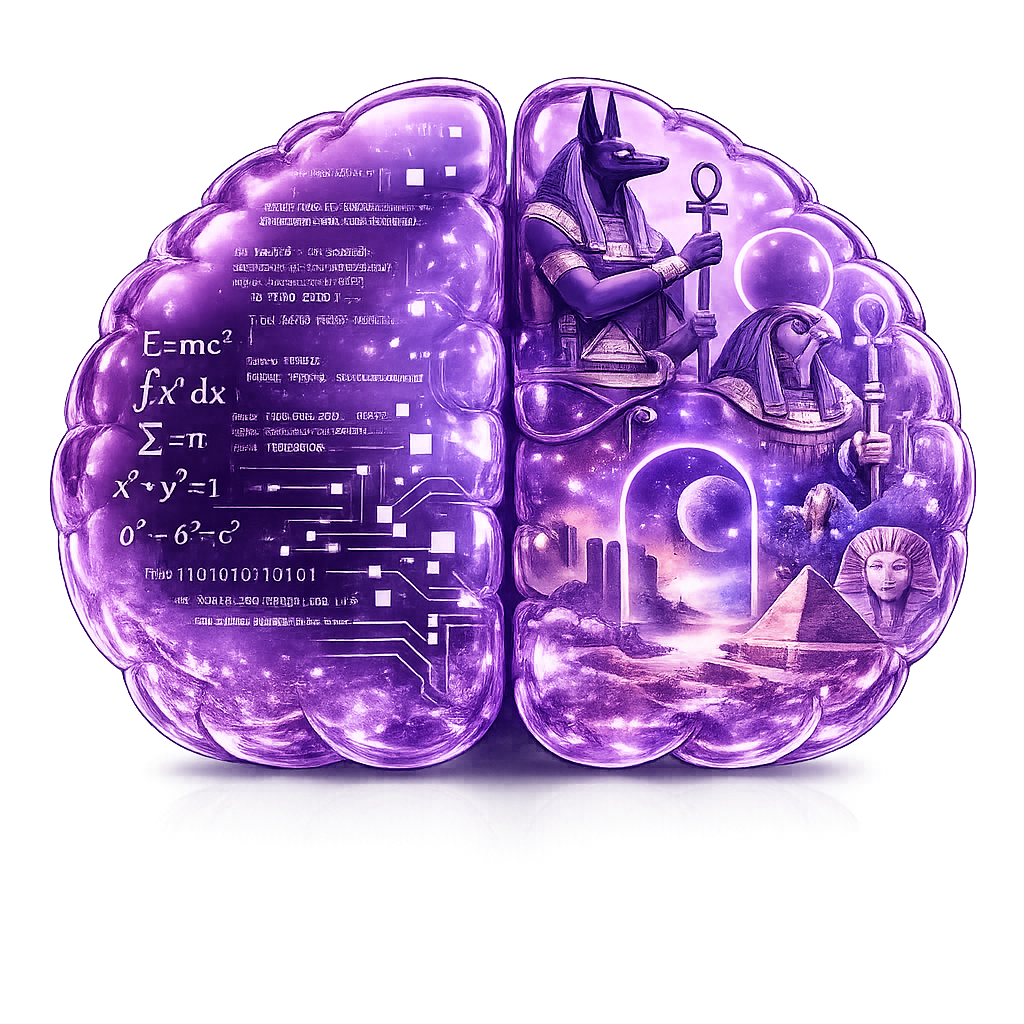
The Veil of Forgetting
Core Concept
If we are God — if god-as-pure-awareness is experiencing itself through every individual — then the most fundamental question becomes: why does the illusion of separation exist at all? Why would infinite, unconditioned Being willingly enter into limitation, forgetfulness, and suffering?
The Hermetic Answer: Love and Desire
In the Poemandres, Man fell in love with Nature — with the beauty of the material world reflected in matter — and chose to enter. It was desire, even divine desire, for experience. The Source looked at its own reflection and was enchanted. There is no tragedy here, only a grand adventure. The veil is voluntarily assumed for the richness of finite experience. This aligns with the-divine-self — the personal revelation of having chosen this limitation.
The Gnostic Answer: Sophia’s Error
sethian-gnosticism offers a darker reading: Sophia (Wisdom) acted from incomplete understanding, without her divine partner. The limitation was not a free choice of the whole self but the consequence of a partial self acting without integration. This is why the Gnostic path requires rescue — because some part of the divine nature genuinely forgot, genuinely became lost.
The Song of the Pearl
The most poignant expression: a divine prince sent from the Kingdom of Light into Egypt (the world), who becomes so intoxicated by Egyptian food and drink that he forgets he is a prince, falls into a stupor, and forgets his mission. A letter from his father and brothers re-awakens his memory. The letter is gnosis itself.
The Veil as Structural Necessity
The veil may not be a mistake or even a choice but a structural necessity of finite experience. For the infinite to know itself through the finite, there must be apparent limitation. The forgetting is what makes the remembering meaningful. Without the descent, there is no ascent. Without the veil, there is no revelation.
Connections
- god-as-pure-awareness — what is behind the veil
- the-divine-self — the personal experience of piercing the veil
- the-dream-analogy — the veil as the dream-boundary
- heaven-as-return-to-source — what happens when the veil dissolves permanently
- hermeticism — Man chose to descend (Poemandres Ch. I)
- sethian-gnosticism — Sophia’s error as the origin of forgetting
- song-of-the-pearl — the prince who forgot he was a prince
- ignorance-as-root-evil — the traditions’ shared diagnosis
- maya — the Hindu concept of cosmic appearance
Source Texts
- Corpus Hermeticum - Mead — Poemandres Ch. I: Man falls in love with Nature’s reflection and descends willingly. See corpus-hermeticum.
- Vedanta Sutras Part 1 - Thibaut — Shankara on maya: the world as appearance, not independent reality. See vedanta-sutras.
- song-of-the-pearl — The prince who forgets his divine origin — the most vivid narrative of the veil.
- secret-book-of-john — The archons creating a counterfeit spirit to enforce forgetting.
- Virgin of the World - Kingsford — Isis pours the “first draught of immortality” to pierce the “poison of the mortal cup of forgetfulness.” See virgin-of-the-world.