The Dream Analogy
The Core Image
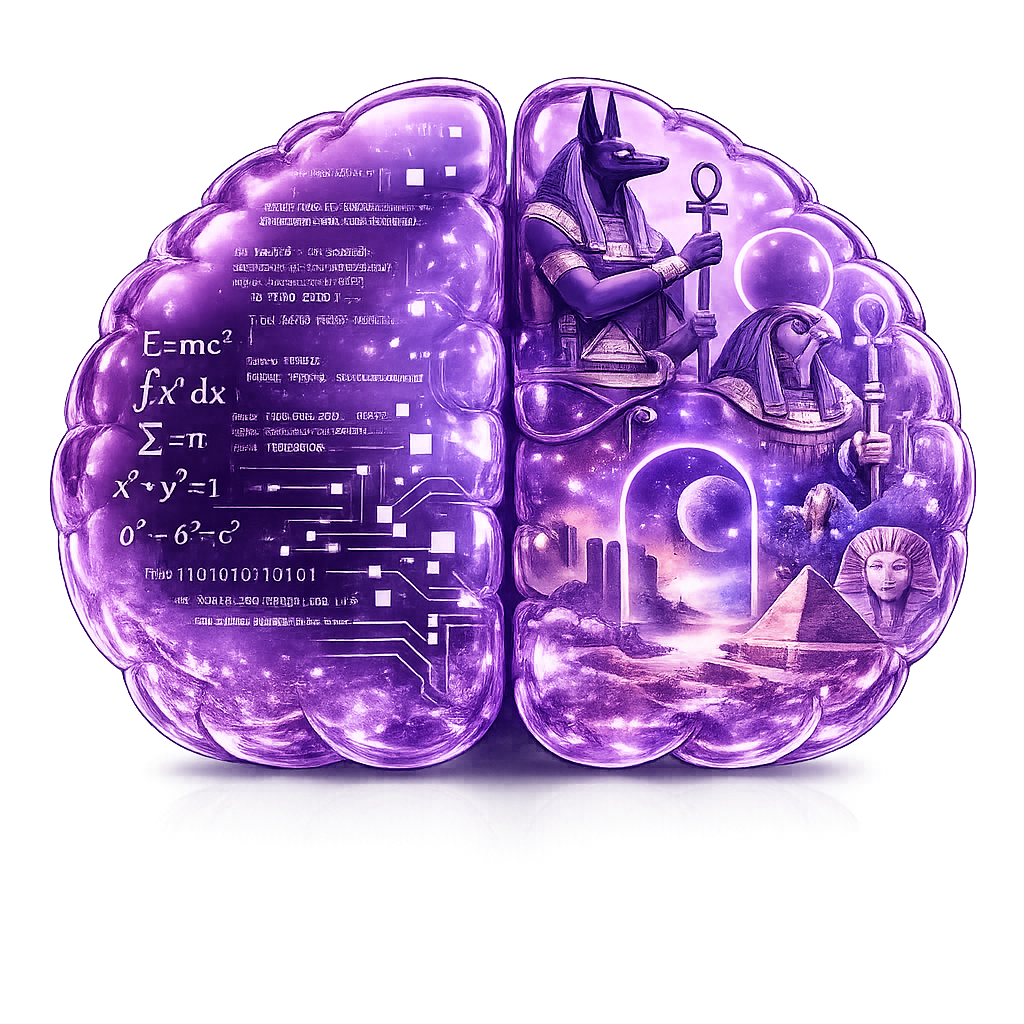
This realm is sustained by God’s awareness like a dream. In a dream, the dreamer simultaneously is every character, every landscape, every event — all arising from and within a single dreaming consciousness. From inside the dream, nothing feels constructed or illusory — it feels absolutely real. When you wake, you don’t go anywhere. The dream simply resolves back into the awareness it was always made of.
Why This Analogy Works
- The dreaming awareness is omnipresent within the dream — every rock, every person, every sky is made of dreaming consciousness
- Dream characters seem to have their own autonomy, experiences, suffering, and joy
- The characters cannot perceive the dreamer directly — the dreamer is the medium, not an object within it
- Waking up is not a journey to a new place but the dissolution of the dream-boundary
Maya — Not “Illusion” but “Appearance”
The Sanskrit maya is usually mistranslated as “illusion.” More precisely: an appearance that is taken to be more solid and independent than it actually is. The world is real as experience — but its apparent independence from god-as-pure-awareness, its seeming externality to consciousness, is the illusion. It arises within awareness, not outside of it.
The Inner World Creates the Outer
This connects directly to outer-world-as-mirror: if the dream-analogy holds, then what appears “outside” is generated from within. My mind, my inner world, is creating my entire perception of the outer world. Not in a solipsistic sense — other centers of awareness share the dream — but in the sense that perception is always a construction of consciousness, never a direct access to something outside it.
Connections
- god-as-pure-awareness — the dreamer behind the dream
- the-veil-of-forgetting — the dream-boundary that makes the dream feel real
- outer-world-as-mirror — the inner world generating outer perception
- heaven-as-return-to-source — waking from the dream
- the-divine-self — the moment of recognizing oneself as the dreamer
- maya — Hindu framework for cosmic appearance
- hermeticism — Poemandres Ch. XI: Mind as the substance of all things
Source Texts
- Corpus Hermeticum - Mead — Ch. XI: Mind as the substance out of which all things are made and perceived. See corpus-hermeticum.
- Vedanta Sutras Part 1 - Thibaut — Shankara: Brahman alone is real, the world is appearance. See vedanta-sutras.
- Diamond Sutra - Gemmell — “All conditioned phenomena are like a dream, an illusion, a bubble, a shadow.” See diamond-sutra.
- Upanishads Part 1 - Muller — The dreaming/waking states as levels of consciousness. See upanishads.